ATON · Amsterdam
We build it.We teach you to run it.We take the crop to market.
Dutch greenhouse technology, the training to operate it, and export for what it produces — from one company, for hot and water-scarce climates.
1 · GREEN HUB
Technology
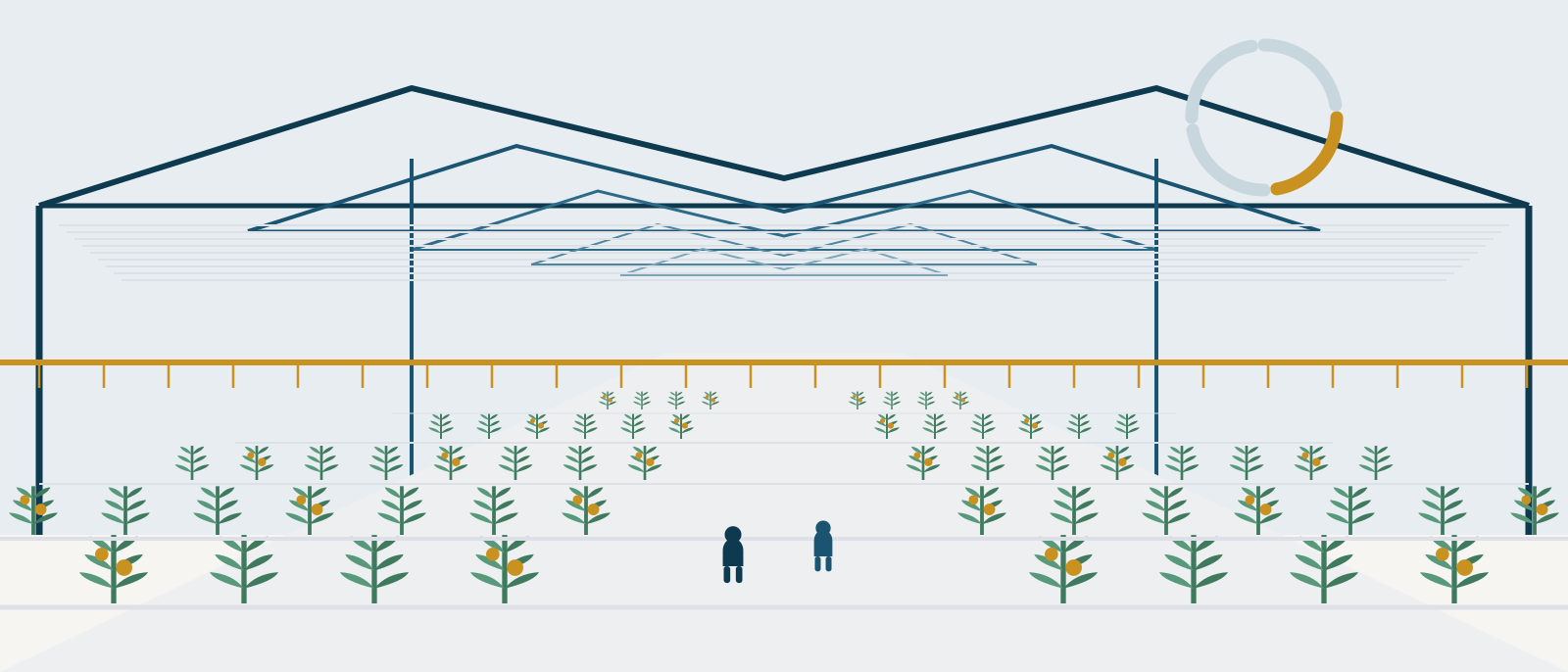
Greenhouses, climate, irrigation and growing systems. Components, integrated systems, or a complete facility.
Explore solutions →
2 · GREEN ACADEMY
Training
Practical training in protected cultivation, taught for hot climates by people who have grown in them.
See the programmes →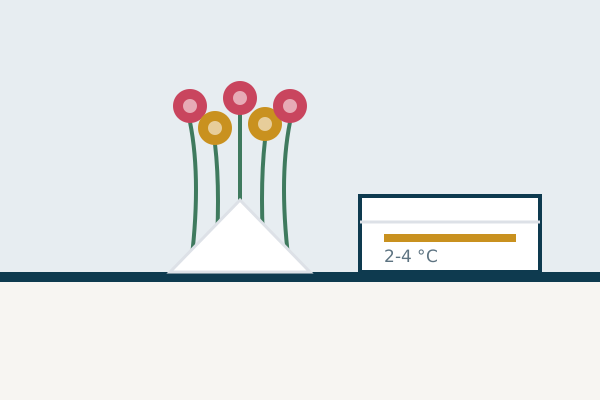
3 · FLORA EXPORT
Export
Fresh cut flowers and plants, bought, packed and shipped worldwide — by the mode each shipment actually needs.
What we handle →Why this is unusual
Most greenhouse projects are assembled from three sets of suppliers who never meet.
The technology is bought from one. The knowledge from another, if at all. The produce is sold to whoever will take it. Each party hands over and steps back — and the grower inherits every gap between them.
ATON does all three. That means the greenhouse is specified for the crop you intend to sell, the team is trained on the equipment actually installed, and the route to market is understood before the first seed is planted.
More crop, per litre of water.
Dutch protected-horticulture technology — greenhouses, climate, irrigation and growing systems — specified and delivered for hot, water-scarce climates.
Growing under glass in a hot climate is a water problem before it is a yield problem.
Open-field production in a water-scarce region uses water it cannot spare and loses much of it to evaporation. Protected cultivation changes the arithmetic — a closed or semi-closed system recirculates water, controls the climate, and produces several times the yield from a fraction of the input.
The technology to do this is mature. It is largely Dutch. What is difficult is specifying it correctly for a climate it was not originally designed for, and getting the parts to work together.
A closed or semi-closed system recirculates water, controls the climate, and produces several times the yield from a fraction of the input.
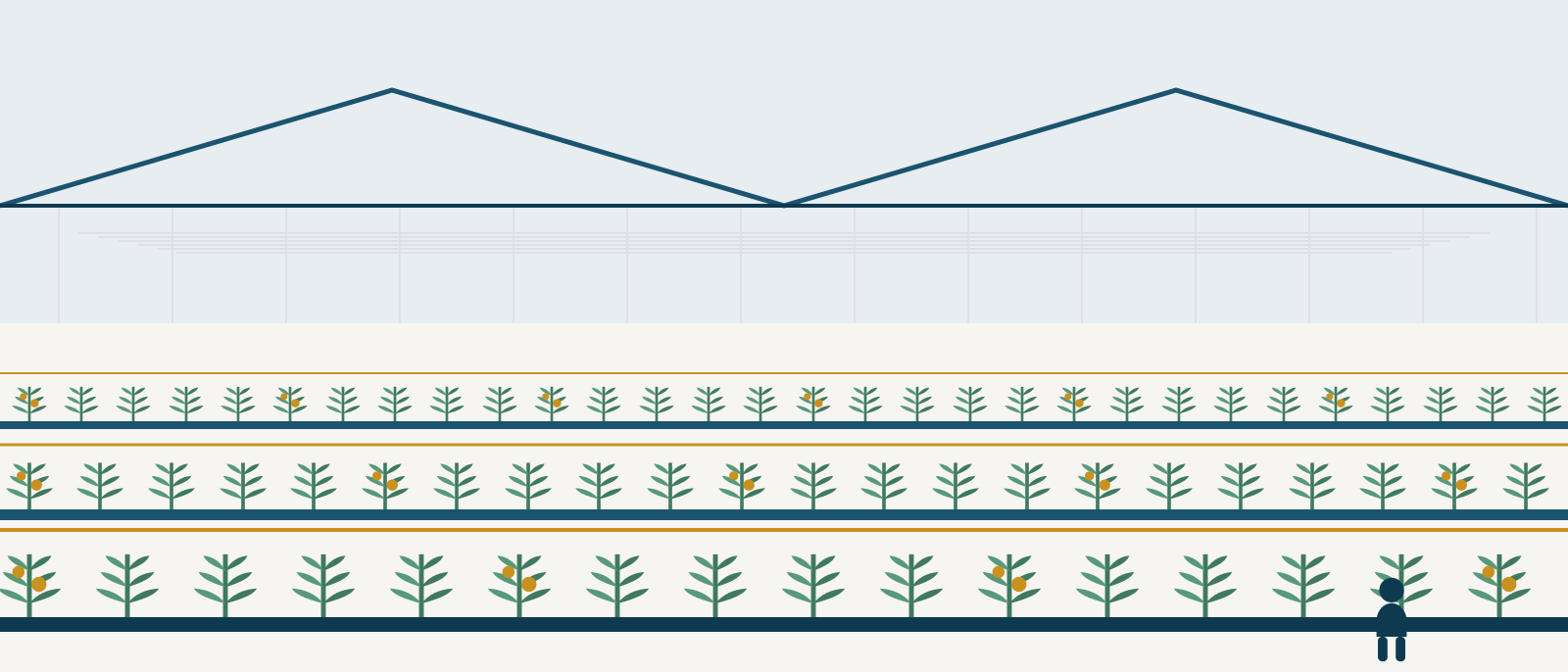
Three ways to buy
Option 01
Components
Individual systems and equipment, specified for your site and climate.
Option 02
Integrated systems
Several elements designed to work together: climate with irrigation, screens with energy.
Option 03
Turnkey projects
The complete greenhouse, from design through commissioning, with training handed over at the end.
Six solution areas
Each lists what it covers, then what changes when the same greenhouse is built at 45°C instead of 15°C — the part most suppliers leave out.
Area 01
Greenhouse structures
Structures and foundations · covering materials · roof and side ventilation · gutters and drainage · installation and construction management.
- Ventilation area matters more than insulation. The vent-to-floor ratio becomes one of the most consequential decisions in the build.
- Covering choice is a light and heat trade-off. Diffuse materials that raise yield in low light may admit more heat than the crop can handle.
- Wind and sand load. Calculations for a Dutch polder do not transfer; abrasion changes both structure and maintenance.
Area 02
Climate and energy
Climate computers and control software · ventilation · heating · evaporative and pad-and-fan cooling · screens · CO₂ dosing · dehumidification · sensors.
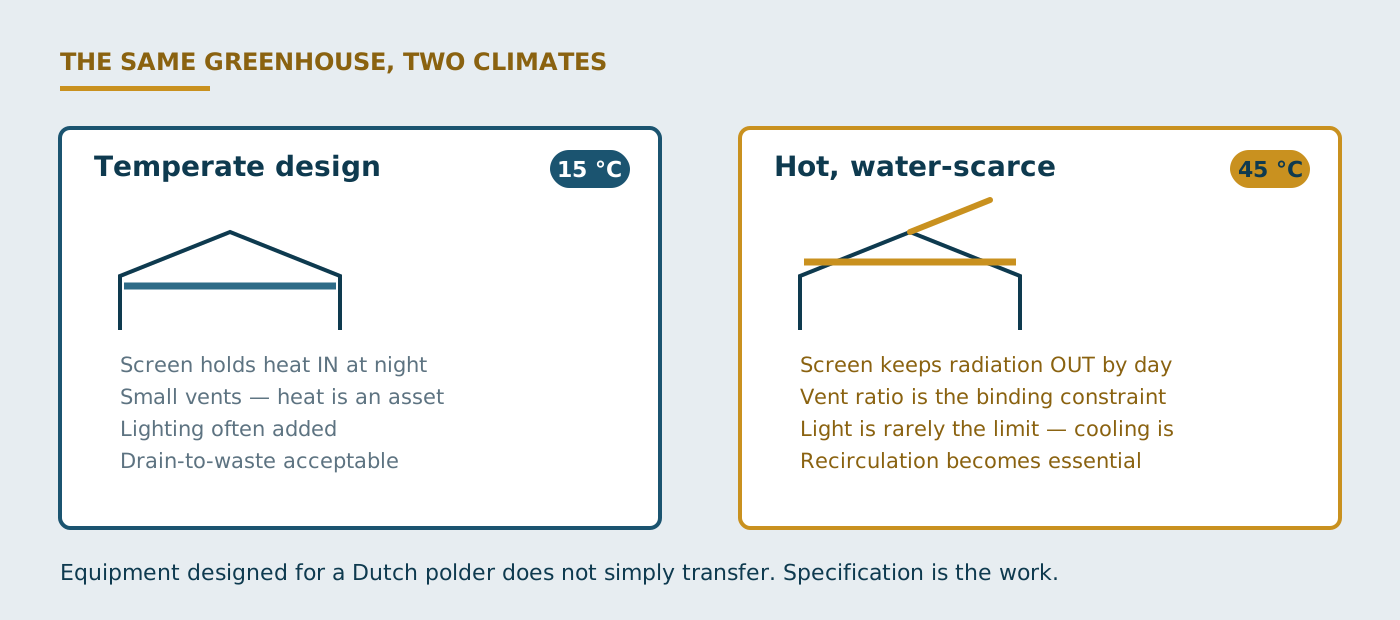
- Screens are used for the opposite reason. Here their primary job is keeping radiation out by day, not holding heat in at night.
- Cooling capacity is the binding constraint. Evaporative cooling consumes water, so it must be sized together with irrigation.
- Humidity moves the wrong way. Dehumidification designed for cold outside air does not work when the outside air is hot.
Area 03
Water and irrigation
Irrigation and fertigation units · treatment and filtration · disinfection including UV-C · drain collection and recirculation · nutrient dosing · storage · monitoring.
- Source water is usually the first problem. Test it before designing anything — it determines the whole treatment train.
- Recirculation moves from optional to essential. It requires disinfection, which requires monitoring. One decision, not three.
- Evaporation rates change everything downstream. Peak demand affects pump sizing, buffer capacity and pipe diameters throughout.
Area 04
Growing systems
Substrates and growing media · gutters, troughs and hanging systems · benching · propagation facilities · horticultural LED lighting · internal transport.
- Substrate choice changes irrigation strategy entirely. Temperate water-holding capacity can create root-zone problems at higher transpiration.
- Root-zone temperature becomes a variable to manage. In extreme conditions it can limit yield more than air temperature does.
- Supplementary lighting is often unnecessary. Budget that would go to LEDs is usually better spent on cooling and screening.
Area 05
Crop protection
Insect screening · biological control agents and introduction programmes · scouting and monitoring · hygiene protocols and entry control · trapping and detection.
- Pest pressure follows a different calendar. Without a cold season to break the cycle, populations build continuously.
- Screening restricts airflow exactly when you need it most. The trade-off has to be resolved with the structure, not afterwards.
- Biological control needs the climate to suit the insect too. Some agents that perform in Northern Europe do not establish at higher temperatures.
Area 06
Post-harvest
Grading and sorting · packing lines · pre-cooling and cold storage · internal logistics · packaging materials · traceability.
- Pre-cooling stops being optional. The gap between harvest and cold is the most damaging hour in the chain.
- Cold-chain capacity is sized for peak, not average. A store sized on average volume fails when the crop is most valuable.
- Packing standards are set by the destination. A European buyer's requirements differ from a regional one, and the line has to do both.
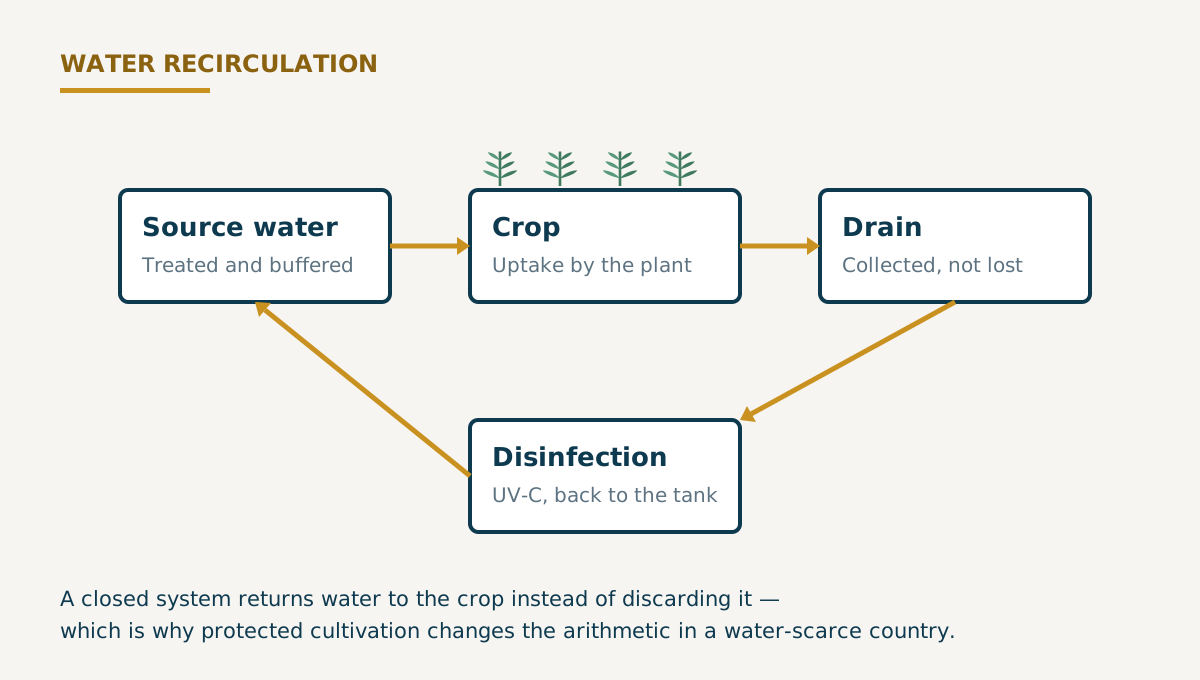
Water is the argument.
A closed or semi-closed system returns water to the crop instead of discarding it. That single change is what makes protected cultivation an economic proposition in a water-constrained country rather than a technical preference.
Recirculation requires disinfection, which requires monitoring. The three are one decision, not three.
The same greenhouse behaves differently at forty degrees.
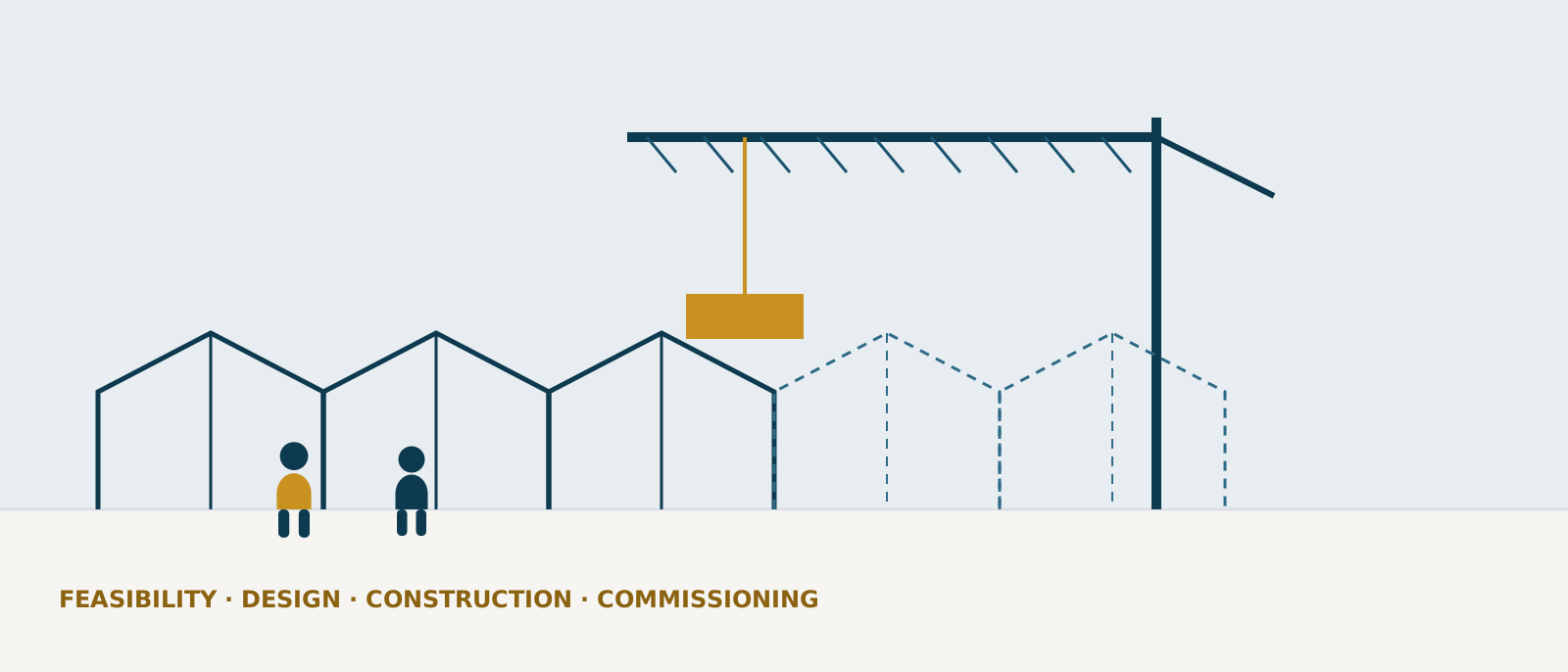
Turnkey — from feasibility to a working facility.
Where you want the whole thing delivered rather than assembled from suppliers, we take the project from site assessment through construction and commissioning, and hand it over with the team trained.
The Dutch greenhouse sector exists because the Netherlands is a difficult place to grow.
Little land, little light, high energy cost. The response was a century of engineering — and an industry where the supply chain for a single greenhouse spans dozens of specialist manufacturers, each solving one part of the problem extremely well.
Green Hub works inside that supply chain. We specify from it, buy from it, and take responsibility for the result arriving as one system rather than forty deliveries.
Next in the chain
Someone has to know how to run it.
Practical training in protected cultivation — climate, water, nutrition and crop management — taught by people who have done it, for the facilities you actually operate.
The technology is the easy part.
Modern protected cultivation is a system with a great many variables — climate, irrigation, nutrition, crop protection, energy — that interact with each other and with a climate the equipment was not originally designed for.
Facilities underperform for one reason far more often than any other: the people running them were never taught how. Not because they lack ability, but because the knowledge sits in a Dutch industry built over a century and was never transferred with the equipment. Green Academy transfers it.
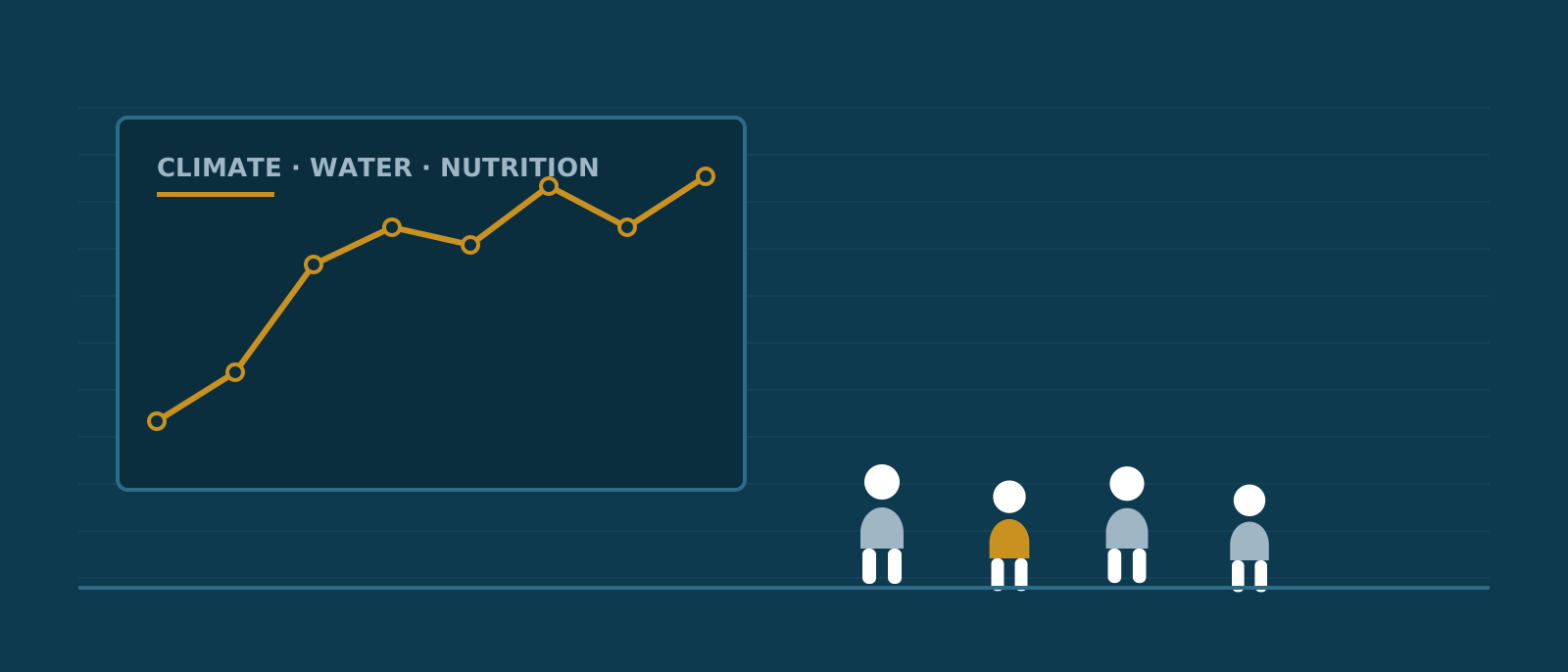
Facilities underperform for one reason more than any other.
The people running them were never taught how — not for lack of ability, but because the knowledge sits in a Dutch industry built over a century and was never transferred with the equipment.
What we teach
Four technical disciplines, plus the operational layer that turns them into a business.
Discipline 01
Climate management
Ventilation, screening, heating and cooling strategy, humidity and CO₂ — reading the crop rather than the setpoint.
Discipline 02
Water and nutrition
Irrigation strategy, fertigation, drain analysis, recirculation and disinfection. The system that matters most in a water-scarce climate.
Discipline 03
Crop management
Growing strategy through the season, plant balance, pruning and training, yield planning.
Discipline 04
Crop protection
Integrated pest management, biological control, scouting, hygiene protocols.
Around them
Operations
Labour planning, packhouse handling, record keeping, and the economics of a growing cycle.
Around them
Commissioning support
Delivered alongside a new facility, through the first growing cycle.
We train people on the systems we supply.
Green Academy is part of ATON, alongside Green Hub, which specifies and delivers greenhouse technology. That means training is not general theory about protected cultivation — it is instruction on the actual climate computer, the actual irrigation unit and the actual screen strategy installed in your facility. And where we did not supply the facility, we still start from what is in it rather than from a curriculum.
Taught for the climate you grow in.
Most protected-cultivation training assumes a temperate climate, because that is where the industry was built. At forty degrees the same greenhouse behaves differently — screens are used for a different reason, condensation moves the other way, source water is a variable rather than a constant, and pest pressure follows a different calendar.
Three ways to learn, and they are not equivalent.
Format 01
In the Netherlands
In working greenhouses, at the centre of the industry. The strongest format, because participants see mature operations running at a standard they can then aim for.
Format 02
At your facility
Taught on your equipment, with your crop, with your team. The most directly applicable, and the format that produces change fastest.
Format 03
Online
For theory, follow-up and refreshers between sessions. Useful, and not a substitute for standing in a greenhouse.
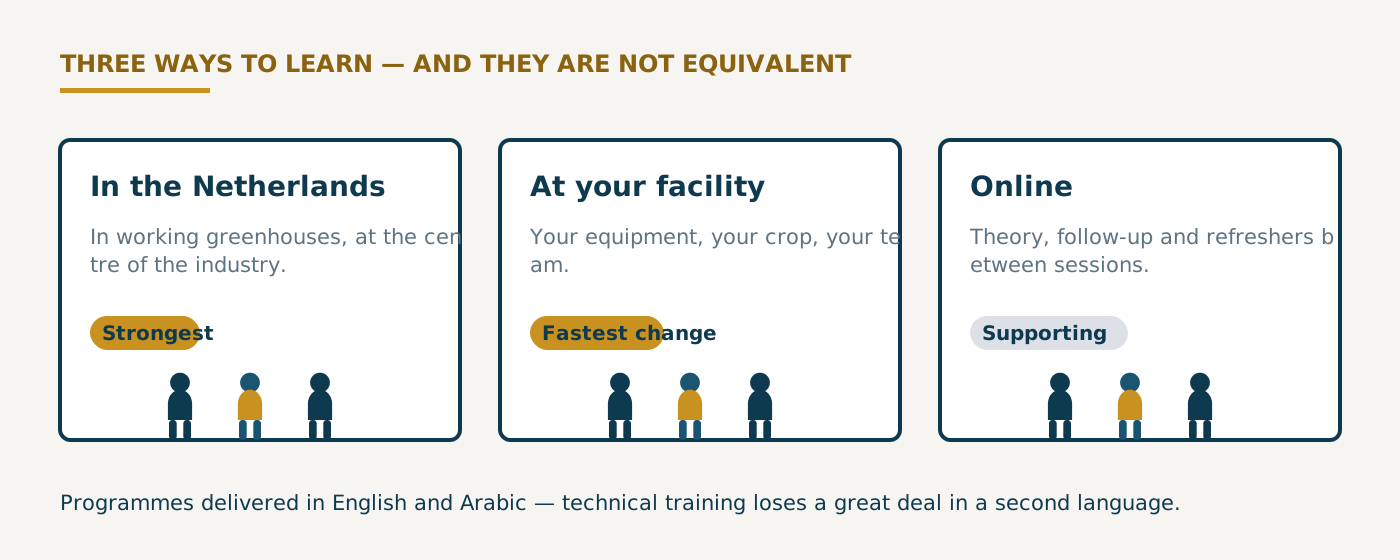
Programmes are delivered in English and Arabic. Technical training in a second language loses a great deal; we would rather teach in the language the team thinks in.
Training is the cheapest insurance on a greenhouse investment.
A protected-cultivation facility is a substantial capital commitment, and its return depends almost entirely on how well it is operated. The gap between a well-run and a poorly-run greenhouse of identical specification is not marginal — it is the difference between a business and a write-off.
Training is a small fraction of project cost. It is also the only part of the budget that directly protects the rest of it.
Next in the chain
Next
Flora Export
Trained teams grow crops that meet a specification. We move them to market.
How we ship →Activity 01
Green Hub
Planning a new facility? We specify and deliver the technology too.
Explore solutions →Fresh cut flowers and plants, moved the way each shipment actually needs.
We buy, pack and ship high-quality cut flowers and plants worldwide — by air where speed decides, and increasingly by sea where it does not.
Step 01
We buy
From growers we know, whose product and packing standard we understand. We take title, which means we carry the risk rather than passing it to you.
Step 02
We pack
To the destination's standard, pre-cooled correctly, consolidated where a single grower cannot fill a load.
Step 03
We ship
Air or sea, chosen per shipment, with the cold chain maintained and documented from the packhouse to arrival.
Flowers are the hardest thing in horticulture to move, and the easiest to get wrong.
Cut flowers begin dying the moment they are cut. Every hour out of temperature costs vase life at the other end, and the buyer never sees the reason — only a shorter stem life than the last shipment.
Which is why we handle the product rather than book the freight. Buying, packing and shipping are one job. Split them between three parties and the cold chain has three places to break.
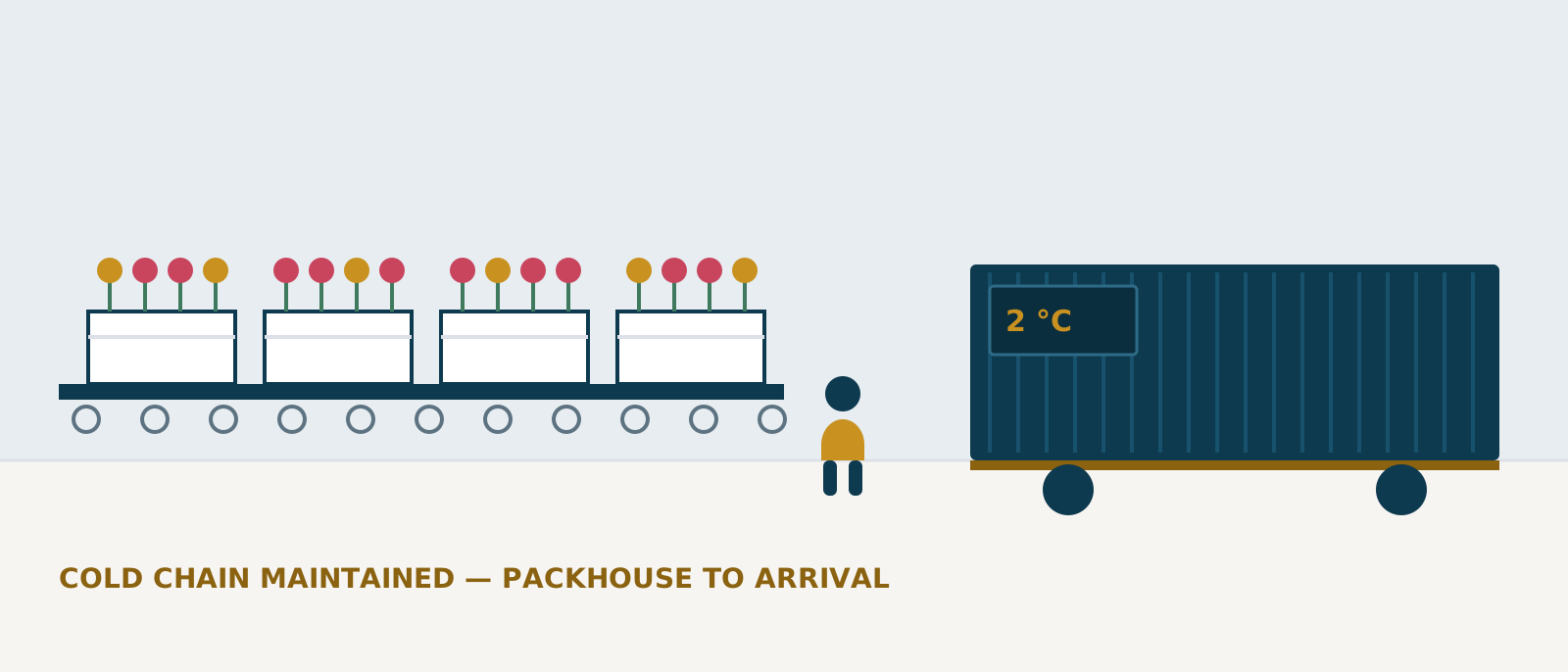
Air is the default. It should be a decision.
For decades flowers flew because there was no alternative. There is now, and on the right varieties over the right distance it costs around half as much.
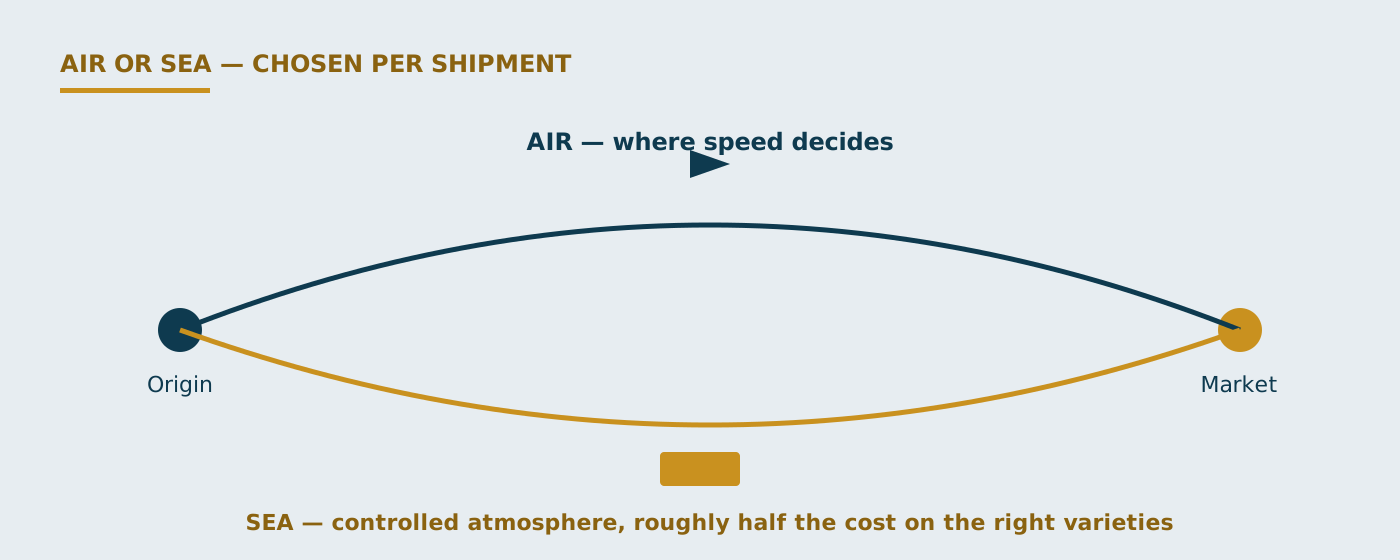
Controlled-atmosphere reefer containers hold flowers at a stable temperature and a controlled gas mix for the length of a voyage. Where packing and pre-cooling are done properly, vase life on arrival is comparable to air freight — in some cases better, because the temperature never fluctuates the way it does across an airport apron, a warehouse and a hold.
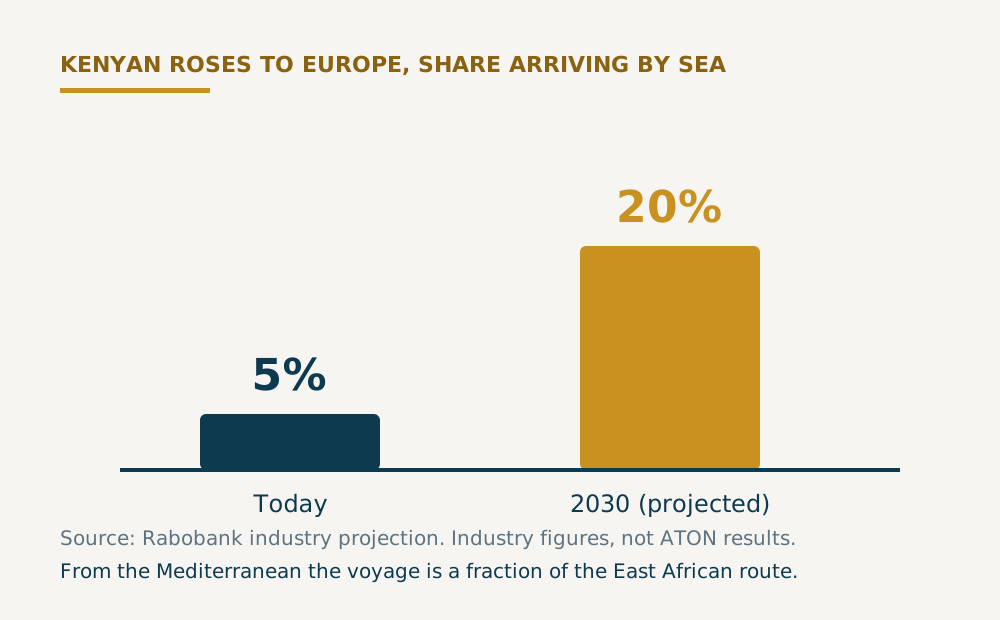
The industry has moved with this.
The first containerised Kenyan roses reached Rotterdam by sea in 2025, and the share arriving in Europe by sea is projected to rise from around 5% today to roughly a fifth by 2030.
Rabobank projection. Industry figures, not ATON's own results.
Consideration 01
Transit time
From East Africa a sea voyage to Northern Europe takes four to five weeks, which is the main reason the shift has been slow. From the Mediterranean it is a fraction of that — which is why the case is stronger on our routes than on the ones the industry usually discusses.
Consideration 02
Consolidation
A container must travel full, pre-cooled and packed to one standard. Most growers cannot fill one alone. We buy from several and pack them together — so the load is consolidated before it is a problem.
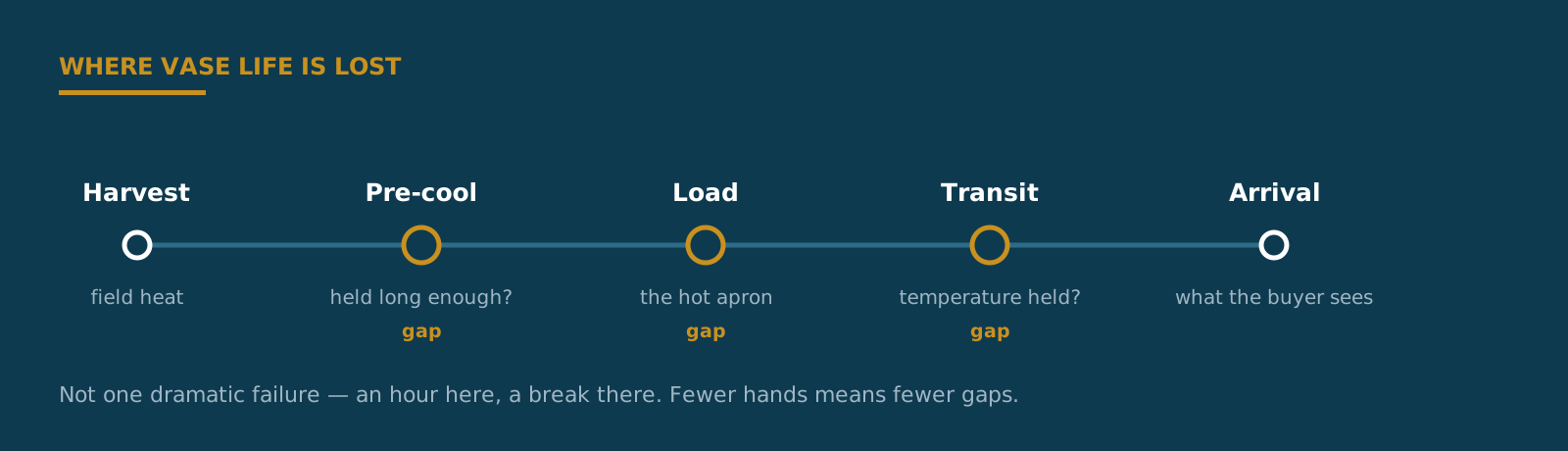
Vase life is lost in the gaps.
Not usually in one dramatic failure, but in an hour on a hot apron, a break between cold store and truck, a pre-cool that was not held long enough. The buyer sees only that the flowers did not last. Because we buy and pack, the chain has fewer hands in it — and the ones it has are ours.
What we handle
Handled
Cold chain
- Pre-cooling and packing to the destination's standard
- Temperature maintained and recorded end to end
Handled
Plant health
- Phytosanitary certification obtained at origin, checked against the destination's requirements
- Plant health and import permits
Handled
Documents and customs
- Origin documentation, including preferential claims
- Export and import customs clearance
If you grow it, we will buy it.
We are looking for growers with consistent quality and a packhouse that can work to a specification.
What we offer — we buy, so you are paid by us rather than waiting on an unknown buyer at the other end. Access to European and regional markets without an export department. Documentation handled. And an honest view on routing, including when air freight is costing you more than it is worth.
What we ask — consistent grading, correct pre-cooling, and the traceability the destination requires.
Complete projects
A greenhouse is not a purchase. It is an operation.
We deliver the facility, the trained team to run it, and the route to market for what it grows — under one contract, with one party answerable.
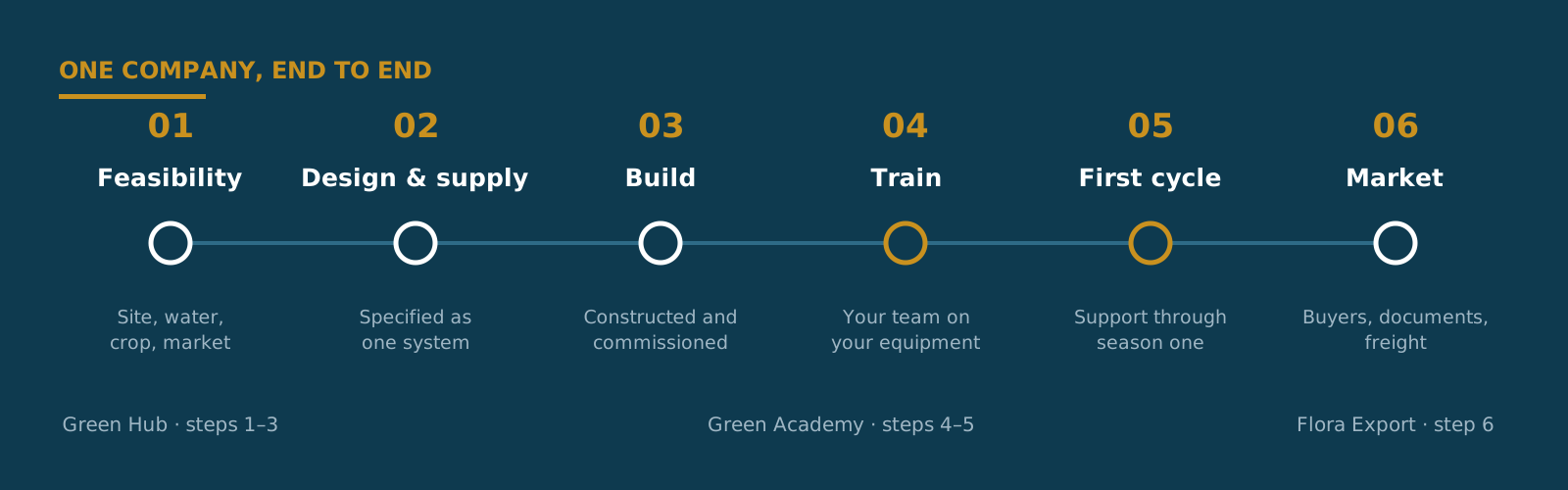
Green Hub
Build it
Steps 1–3 · from a site to a working facility
- FeasibilitySite, climate, water, crop and market. Whether it works, at what scale, and whether it pays.
- Design and supplyThe facility and every system in it, specified together and sourced from the Dutch supply chain.
- Construction and commissioningBuilt, started, calibrated and proven.
Green Academy
Run it
Steps 4–5 · from a facility to an operation
- TrainingYour team taught on the equipment installed, before they are responsible for it.
- First growing cycleSupport alongside your people while the decisions that matter are made for the first time.
Flora Export
Sell it
Step 6 · from a crop to a buyer
- Route to marketBuyers identified, documentation handled, produce moved by the mode it needs — air or sea.
The gaps are where projects fail.
Between the supplier and the operator, nobody is responsible for whether the team can run the equipment. Between the operator and the market, nobody is responsible for whether the crop can be sold at the price the business case assumed.
Those two gaps account for more disappointing greenhouse projects than any technical fault. Closing them is the reason these three divisions sit in one company.
You do not have to buy all of it.
Most clients start with one part — a system, a training programme, a shipment. The chain is available when it is useful, not compulsory.
Tell us which part you need and we will say plainly whether it is something we should be doing.
Markets
Where we work, and why there.
Three markets, each for a different reason. We work from Amsterdam, inside the Dutch horticultural supply chain, in English, Arabic and Dutch.
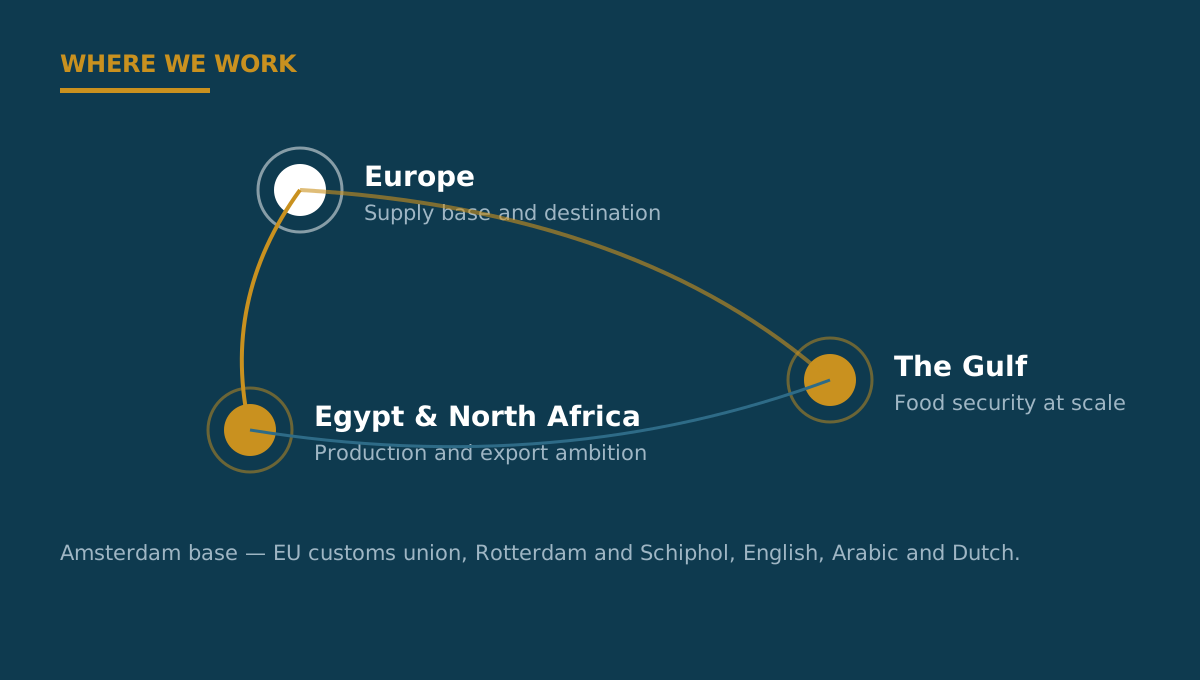
Production
Egypt and North Africa
Established horticultural production and growing export ambition — with water constraints that make protected cultivation an economic argument rather than a technical preference.
Investment
The Gulf
Food-security investment at scale, an extreme climate, and a requirement for systems that work at temperatures European greenhouses were never designed for.
Supply base
Europe
Where we source the technology, and the destination for much of what we move. Amsterdam gives us the EU customs union, Rotterdam and Schiphol.
Company
One company, four activities, one chain.
ATON B.V. is an Amsterdam trading and technology company. Three divisions work in horticulture and together cover a complete project from feasibility to market. The fourth handles international trade beyond agriculture.
Activity 01
Green Hub
Dutch greenhouse technology, specified for hot and water-scarce climates.
Activity 02
Green Academy
Training in protected cultivation, taught for the climate you grow in.
Activity 03
Flora Export
Fresh cut flowers and plants — bought, packed and shipped by air or sea.
What we are here to do.
To exchange expertise between Europe and the Middle East — moving technology, knowledge and produce in both directions, and being useful at every step rather than at one of them.
How we work.
- Meet the client's expectations the first time, and every time after that.
- Put the client first, consistently, not selectively.
- Execute every detail, because in this industry the small ones decide the outcome.
- Say what we can deliver, and decline what we cannot.

Contact
Start anywhere.
Tell us what you are planning and which part you need. If it is not us, we will say so.